Free Play Options Online
Starting poker doesn’t require risking real money. Many online poker rooms offer play-money tables where you can learn the mechanics of the game without financial pressure. These tables let you understand betting patterns, hand rankings, and basic strategy concepts.
Play-money games have limitations. Players often make wild plays they would never make with real money, creating an unrealistic game environment. However, these tables serve their purpose for absolute beginners who need to learn the rules and interface. Spend a few sessions here, then move on to more realistic practice methods.
Some poker sites offer freeroll tournaments with real prize pools. These events require no entry fee but pay out actual money to top finishers. The competition is typically weak, making them excellent for building experience while having a chance to build a small bankroll from nothing.
Home Games With Friends
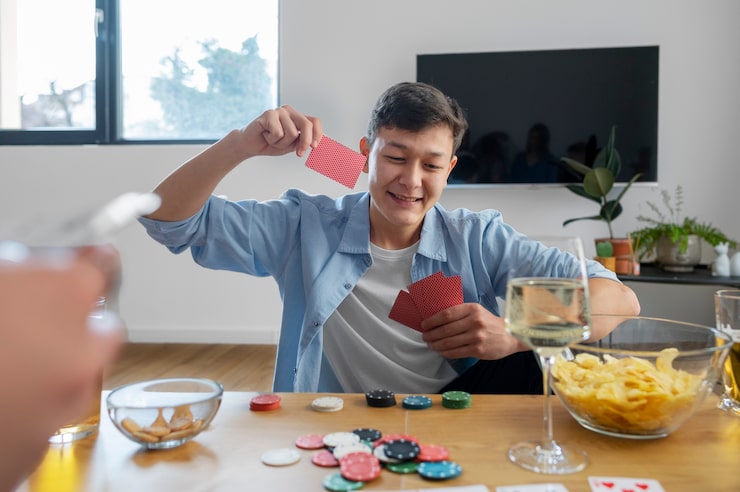
Organizing a home game with friends provides valuable experience in a low-pressure environment. Keep the stakes small enough that losing won’t hurt anyone’s finances. A $10 or $20 buy-in creates just enough pressure to make the game realistic without risking significant money.
Home games let you experiment with different strategies and observe how opponents react to various plays. You can try different betting sizes, bluffing frequencies, and hand selections without worrying about losing large sums. The feedback is immediate and the learning curve is steep.
Rotate the dealer position and practice dealing yourself. Being in the know of the mechanical aspects of running a poker game makes you more comfortable at the table and helps you catch dealer errors in casino or online settings. Many players overlook this skill, but it adds to your overall poker competence.
Hand Analysis & Review
Reviewing hands costs nothing but time and offers tremendous value. After each session, write down interesting hands you played and analyze your decisions. Consider alternative lines you could have taken and think about what information you had at each street.
Join online poker forums where players post hands for analysis. Reading other people’s hands and the responses from experienced players teaches you to think about poker in new ways. You’ll encounter situations you haven’t faced yet and learn how to handle them before they cost you money.
Use poker equity calculators to analyze your decisions mathematically. These tools show you the actual percentages and expected values of different plays. Many players have gut feelings about poker situations that turn out to be mathematically incorrect. Calculators reveal the truth without costing you a dime.
Video Content & Streaming
Poker strategy videos provide free education from professional players. YouTube hosts thousands of hours of poker content, ranging from beginner fundamentals to advanced concepts. Watch players who specialize in your preferred game type and stakes level.
Live poker streams on platforms like Twitch offer real-time learning opportunities. You can watch professionals make decisions and often hear their thought process through commentary. Many streamers interact with their chat, answering questions and explaining their reasoning.
Take notes while watching videos. Pause when you see an interesting decision and consider what you would do before seeing the outcome. This active learning approach helps you internalize concepts better than passive watching. Review your notes regularly to reinforce the lessons.
Poker Books & Written Strategy
Books remain one of the best ways to improve at poker without spending money at the tables. Many public libraries carry poker books, giving you free access to decades of accumulated strategy knowledge. Start with fundamentals books before moving to advanced texts.
Classic books like “The Theory of Poker” and “Harrington on Hold’em” have taught countless players how to think about the game correctly. These texts don’t go out of date because they focus on fundamental concepts rather than specific tactics that might change with the game’s evolution.
Read actively by taking notes and working through examples. Many poker books include hand quizzes and practice scenarios. Treat these sections seriously rather than skipping them. The mental exercise of analyzing situations strengthens your decision-making skills for real games.
Mental Game Practice
Your mental state affects your poker performance as much as your technical skills. Practice meditation, mindfulness, or breathing exercises to improve your emotional control. These techniques help you stay calm during downswings and avoid making emotionally-driven mistakes.
Keep a poker journal where you record not just hands but your emotional state during sessions. Note when you felt tilted, anxious, or overconfident. Patterns will emerge, helping you identify triggers that lead to poor play. Awareness is the first step toward improvement.
Set aside time to visualize yourself making good decisions at the poker table. Mental rehearsal is a proven technique used by athletes in many sports. Picture yourself folding when you should fold, betting when you should bet, and staying calm when you take a bad beat.
Software & Training Tools
Free poker training software helps you practice specific skills in isolation. Hand reading trainers, preflop range quizzes, and GTO solvers with free tiers let you work on weak areas of your game. Twenty minutes of daily practice with these tools can accelerate your improvement dramatically.
Range visualization software teaches you to think in terms of ranges rather than specific hands. This shift in perspective marks the transition from beginner to intermediate player. Many free tools exist that let you build ranges, input board textures, and analyze different scenarios.
Bankroll tracking spreadsheets help you understand your results and identify leaks in your game. Create a simple spreadsheet to log every session, including date, location, stakes, duration, and profit or loss. The patterns you discover will guide your study and practice priorities.
Study Groups & Discussion
Form a study group with other players at your skill level. Meet weekly to discuss hands, share resources, and quiz each other on concepts. Teaching others reinforces your own knowledge, and their questions will reveal gaps in your knowledge.
Online study groups and Discord servers dedicated to poker offer free communities of learners. Participate actively by posting hands, answering questions, and engaging in strategy discussions. The collective knowledge of the group exceeds what any individual could learn alone.
Find a study partner who plays similar stakes and game types. Exchange hand histories and provide feedback to each other. This peer review system costs nothing but creates accountability and accelerates learning for both players.
Tournament Simulation Practice
Practice tournament situations by simulating specific scenarios. Deal out hands and practice playing short-stacked with the bubble approaching. Work through situations where you’re the chip leader or where you have a medium stack at the final table. This targeted practice prepares you for high-pressure spots.
Create your own drills based on situations you struggle with. If you have trouble with three-bet pots out of position, deal hands specifically to practice that scenario. Repetition builds comfort and competence without risking money at actual tables.
Time yourself making decisions to build your decision-making speed. In live tournaments, you need to make correct decisions within the time constraints of the shot clock. Practice making solid decisions quickly, as slow play can put you at a disadvantage against more experienced players.