
If you’ve ever wanted a simple, fast-paced card game that’s easy to learn and fun for all ages, War card game is a perfect choice. Whether you’re looking for a casual game night activity or a way to teach kids about card rankings, War offers endless entertainment. In this guide, we’ll cover everything from setup to advanced variations, ensuring you can confidently play and enjoy the game.
Short Answer – How Do You Play War Card Game?
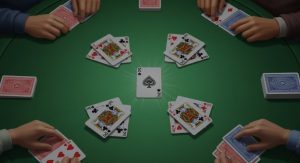
War is a straightforward card game played with a standard 52-card deck between two players. Each player flips the top card of their deck simultaneously, and the higher card wins both. If the cards are equal, a “war” occurs, where additional cards are played to determine the winner.
- Played with a standard 52-card deck.
- Two players reveal top cards; highest card wins.
- Tie triggers a “war” with extra cards.
- Goal: collect all cards from the opponent.
This short answer gives beginners an instant understanding while preparing them for the detailed step-by-step guide below.
Core Explanation of War Card Game
Overview and Objective of the Game
The primary objective in War is simple: win all the cards from your opponent. The game is mostly luck-based with minimal strategy, making it suitable for casual play.
Key points:
- Type: Two-player, luck-driven card game.
- Objective: Collect all 52 cards.
- Game style: Fast, repetitive rounds, beginner-friendly.
Brief history: War has roots in European card games dating back to the 19th century. Originally a pastime for children, it spread worldwide and remains one of the most accessible card games today.
The Deck and Card Rankings
War is played with a standard 52-card deck. The cards are ranked from Ace (high) down to 2 (low), though some house rules consider Ace low. Suits are irrelevant in standard play.
Card ranking overview:
- Ace: Highest card (optional low in variants).
- King, Queen, Jack: Face cards.
- 10–2: Number cards.
- Suits: No effect on gameplay.
Number of players is typically two, but multiplayer variations exist (3–4 players), which slightly change the dynamic and length of the game.
How Do You Play War Card Game – Step-by-Step Guide
Playing War is straightforward, but following these steps ensures smooth gameplay.
Step 1: Setup
- Shuffle the deck thoroughly.
- Divide the deck evenly between the two players, face-down.
- Each player holds their stack without looking at the cards.
This initial setup ensures fairness and randomness, which is crucial for a luck-driven game.
Step 2: Starting the Game
- Both players simultaneously reveal the top card of their deck.
- Compare card values; the higher card wins the round.
- The winner places both cards at the bottom of their stack.
This continues round by round, building excitement as players accumulate more cards.
Step 3: Handling a War
A “war” occurs when both players reveal cards of equal rank.
How to handle it:
- Each player places three cards face-down.
- Then, reveal a fourth card face-up.
- The higher fourth card wins all cards involved in the war.
If the fourth cards are also equal, repeat the war process until a winner emerges. This is the most suspenseful part of the game.
Step 4: Continuing the Game
- Keep playing rounds, flipping top cards each turn.
- Continue resolving ties through wars until one player holds all 52 cards.
- Optional strategies: some players choose to place cards in specific orders to speed up the game, though luck dominates outcomes.
Step 5: Winning the Game
- The winner is the player who eventually collects all cards.
- Game duration varies: a casual match can last 15–30 minutes, while extended wars can take longer.
Variations of War Card Game
Classic vs. Modern Rules
- Classic: Standard two-player, Ace-high deck, standard war rules.
- Modern: Optional Ace-low variants, quick war rules, or digital adaptations for mobile devices.
Multiplayer Versions
- Adapted for 3–4 players by dividing the deck evenly.
- Rules adjust slightly; the player with the highest card each round collects all cards revealed.
Quick Play and House Rules
- Quick War: Skip multiple-card wars to shorten game duration.
- House rules: Custom variations may include reversing card ranks, reshuffling, or limiting rounds.
War Card Game Comparison Table
| Version/Type | Number of Players | Card Rules | Game Duration | Difficulty |
|---|---|---|---|---|
| Classic War | 2 | Standard 52-card deck | 15–30 min | Easy |
| Multiplayer War | 3–4 | Standard deck | 20–45 min | Medium |
| Quick War | 2 | 52-card deck, no multiple wars | 10–15 min | Easy |
| House Rules Variants | 2–4 | Custom rules | 15–60 min | Easy–Medium |
Each version caters to different audiences: Classic is ideal for traditional play, Multiplayer adds excitement, Quick War is great for short sessions, and House Rules offer creative flexibility.
Common Questions People Also Ask
Can more than two players play War card game?
Yes! Multiplayer versions allow 3–4 players. The gameplay changes slightly, and rounds are resolved by comparing all players’ top cards simultaneously.
What happens if there is a tie during a war?
If the fourth cards revealed during a war are tied, repeat the war process with additional face-down and face-up cards until one player wins.
Is War purely luck-based or is strategy involved?
War is mostly luck-based, though minimal strategy can involve managing card order during multiple wars if house rules allow it.
Can War be played online or digitally?
Yes! Several online platforms and mobile apps allow players to play War virtually against friends or AI opponents.
How long does a typical game of War last?
A standard two-player game lasts about 15–30 minutes. Quick variations reduce this to 10–15 minutes, while extended wars can last over an hour.
Are there official tournaments for War card game?
While War is primarily casual, some local competitions and informal tournaments exist, but there is no widely recognized professional competitive scene.
Frequently Asked Questions (FAQs)
1. How do you start a game of War?
Shuffle a standard 52-card deck and split it evenly between two players. Both players hold their cards face-down to start the game.
2. What cards win in War?
Higher-ranking cards win, with Ace usually being the highest. Ties trigger a war with extra cards.
3. Can War be played with more than one deck?
Yes, using multiple decks can accommodate more players or create longer, more chaotic games.
4. Are there any strategies to win War?
War is primarily luck-driven. However, some house rules allow arranging cards during wars, slightly affecting outcomes.
5. How do you handle multiple consecutive wars?
Repeat the war process with additional face-down and face-up cards until a winner emerges.
6. Is War suitable for kids?
Absolutely! Its simple rules make it perfect for children learning card values and game structure.
7. Can the game end in a draw?
Technically, yes, if players continually tie or if the game is stopped midway. Rarely occurs with full-deck play.
8. What are some fun variations of War for parties?
Quick War, multiplayer adaptations, and creative house rules keep gameplay exciting and fast-paced.
Conclusion
War card game is a simple, fast-paced game suitable for players of all ages. Its straightforward rules, combined with variations and house rules, make it endlessly entertaining. By understanding the step-by-step gameplay, common questions, and variations, you can enjoy hours of fun, whether playing with kids, friends, or online opponents. Visit Arch City Poker for proper training and guidance if you are willing to learn.